How to Hand-Pollinate Patio Cucumbers When Bees Never Visit
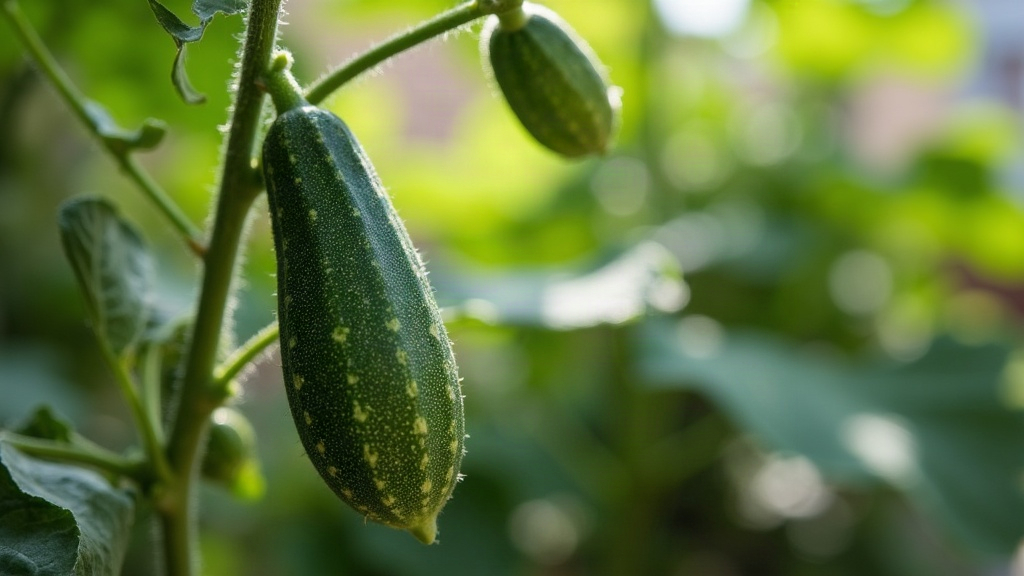
If your balcony cucumbers are covered in flowers but the fruit keeps shriveling up or just never shows up, don’t blame the plant. Nine times out of ten it’s a pollinator problem. High-rise balconies, glassed-in patios, urban courtyards, these spots often see almost zero bee traffic, and cucumbers absolutely need pollen carried from male flowers to female ones before any fruit can form. The fix is almost embarrassingly simple: hand-pollination takes maybe 30 to 60 seconds a day, and it works just as well as a bee visit.
Why Bees Skip Your Balcony
Bees find flowers by scent and by sight, following visual patterns and airborne cues from a distance. Put a cucumber plant on the 8th floor surrounded by concrete and glass, or tuck it behind a screened enclosure, and foraging bees simply never register it exists. Even ground-floor gardens aren’t immune: nearby pesticide spraying, a lack of other blooming plants in the area, or a plant that flowers in a narrow window can all mean thin pollinator traffic. Cucumbers get hit especially hard here because most varieties are monoecious, meaning one plant grows both male and female flowers separately, and each female bloom needs its own individual pollen delivery to set fruit.
How to Tell Male and Female Flowers Apart
Before doing anything, spend a day just looking at your flowers so you can tell them apart at a glance:
- Male flowers sit on a thin, straight stem with nothing behind the bloom, no bulge, no swelling. They tend to show up first, and in bigger numbers, sometimes two or three to every female.
- Female flowers have a small, unmistakable bump right behind the petals that looks like a miniature cucumber. That’s the ovary. Without pollination, it won’t grow at all, it’ll just turn yellow and drop off within a few days.
Check your plants every morning. Flowers usually open at dawn and stay receptive for only a handful of hours, so timing matters more than people expect.
Step-by-Step Hand-Pollination Method
- Work in the morning. Somewhere between 6 and 10 a.m. is the sweet spot, while pollen is fresh and flowers are fully open and receptive.
- Pick a male flower. Pull the petals off gently to expose the pollen-loaded anther, the stalk sitting in the center.
- Move the pollen to a female flower. Rub that anther straight onto the stigma at the center of an open female bloom. Coat it evenly, don’t just dab one spot.
- Or use a small brush. A soft, clean paintbrush or a cotton swab works great if you’ve got one male flower and several female ones open at once. Swirl the brush in the male flower first, then touch it to each female bloom in turn.
- Do this every single day. New flowers open constantly during peak season, so make it part of your morning routine, coffee in one hand, brush in the other.
- Watch for results. Within 2 to 3 days, a pollinated female flower will show a visibly swelling, greening base where the cucumber is forming. If it stayed unpollinated, that base shrivels and the whole flower drops off.
Tips for Better Results
- Try a parthenocarpic variety like ‘Diva’ or ‘Picolino.’ These self-fruiting types set cucumbers without any pollination at all, which is basically cheating in the best way if daily hand-pollination sounds like a chore.
- Skip pollinating during rain or high humidity. Wet pollen clumps together and won’t transfer properly, so you’re wasting your time.
- Grow more than one vine if space allows. Two or three plants overlap their bloom cycles better, giving you more matched pairs of open male and female flowers on any given morning.
- Bring in a few pollinator-friendly plants anyway, something like alyssum, marigold, or flowering basil in a small pot nearby. Even a stray bee or two passing through can pick up the slack on days you forget.
- Don’t bother pollinating in the afternoon. Pollen viability and the stigma’s receptiveness both drop off sharply after midday, so a 3 p.m. attempt is mostly wasted effort.
Common Mistakes to Avoid
- Grabbing two male flowers by mistake and wondering why nothing happened. Double-check the base of the flower every time.
- Pollinating a flower whose petals have already started wilting. That window has closed, and no amount of pollen will revive it.
- Skipping a day here and there. One missed morning during peak flowering can mean losing that entire fruit set.
- Reusing a dirty brush across plants without cleaning it first. That’s a good way to spread fungal spores from one plant to another.
Conclusion
Hand-pollinating cucumbers is one of those low-tech skills that solves an outsized problem. Learn to spot a male flower from a female one, spend a minute each morning moving pollen between them, and you’ll go from a plant full of flowers and zero fruit to a real harvest of crisp, homegrown cucumbers. No bees required.