How to Grow Alpine Strawberries in a North-Facing Balcony
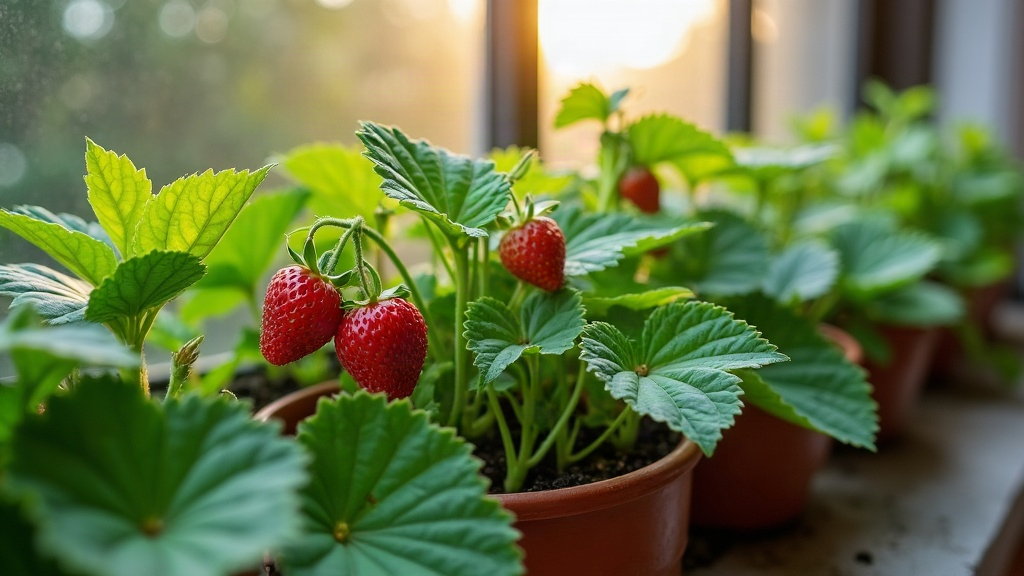
Growing Alpine strawberries (Fragaria vesca) on a north-facing balcony isn’t the long shot most people assume. These are woodland plants at heart, and they actually handle partial shade better than the fat, glossy hybrid strawberries you find at the garden center. Get the container, soil, and light setup right, and you can pick sweet, perfumed berries all summer from a spot most gardeners would dismiss as hopeless.
Why Alpine Strawberries Are the Right Choice for Shade
Commercial June-bearing strawberries want 8+ hours of direct sun or they sulk. Alpine strawberries never got that memo, because they grew up on European forest floors, tucked under tree canopy their whole evolutionary history. That background makes them oddly well-suited to balcony life:
- Filtered or indirect light (4-6 hours of bright, indirect light usually does the job)
- Cooler temperatures, which north-facing spots deliver by default
- Compact growth habits, perfect for small pots and railing planters
- Everbearing fruit production, so you get a trickle of berries all season instead of one big dump
Yes, yields will be lower than a sun-drenched plant would give you. But the flavor, that concentrated, almost perfume-like wild-strawberry taste, makes up for the smaller basket.
Choosing the Right Spot on the Balcony
Here’s the thing: even a north-facing balcony isn’t uniformly dark. Light varies more than people expect. Spend a full day just watching how brightness shifts across your space before you plant anything.
- Corners near a glass door or window often catch reflected light and end up brighter than the railing edge.
- Light-colored walls or floors bounce extra light back onto your plants. If you’ve got a dull dark corner, try setting a white or pale gray board nearby.
- Upper floors tend to get more open-sky light than ground-floor balconies boxed in by neighboring buildings.
Put your pots in whatever corner tests brightest, even if it’s still indirect. Ten extra minutes of decent light each day adds up over a whole growing season.
Best Containers and Soil Setup
Alpine strawberries have shallow, fibrous roots, so pot depth isn’t the priority here. Drainage and steady moisture are what actually matter.
- Container size: 6-8 inch pots per plant, or a long railing planter with plants spaced about 8 inches apart
- Drainage: Drainage holes are non-negotiable; if you’re using a deeper pot, throw a layer of coarse material at the bottom
- Soil mix: A peat-free potting mix cut with compost and perlite works well; you want moisture-retentive soil that still drains
- Mulch: A thin layer of straw or bark mulch keeps roots cooler and cuts down on how often you need to water
Boosting Light Without Direct Sun
Since you’re working with limited sunlight, a few small habits can stretch what little you have:
- Rotate pots weekly so every side of the plant gets its turn in the brightest exposure.
- Use reflective surfaces, like a mirror or a white board propped at an angle to bounce light back onto the leaves.
- Supplement with a grow light in winter or early spring if you want to push the growing season longer. A basic LED grow light on a timer, 12-14 hours a day, works fine for indoor starts or deeply shaded balconies.
- Don’t crowd the pots. Give each plant room to breathe and catch its share of light.
Watering and Feeding in Shade
North-facing balconies stay cooler and shadier, which means soil dries out slower than it would in full sun. That’s a mixed blessing.
- Water only when the top inch of soil feels dry. Overwatering, not underwatering, is what kills most shade-grown balcony strawberries.
- Feed every 3-4 weeks with a diluted, balanced liquid fertilizer, one that leans slightly toward potassium to support fruiting.
- Never let pots sit in standing water. In low light with slow drying, that’s a fast track to root rot.
Pollination Without Bees
Bees don’t visit shaded balconies much, if at all. Luckily, Alpine strawberries are self-fertile, so hand-pollination is quick and easy:
- Grab a small, soft paintbrush or a cotton swab
- Swirl it gently in the center of each open flower
- Repeat every 2-3 days while the plant is flowering, to keep fruit set consistent
What Yield to Expect
Don’t expect bowls of strawberries here. In a north-facing setup you’re looking at a handful of berries every few days per plant, rather than big clusters all at once. The upside is that Alpine strawberries fruit continuously from late spring into fall, so if you keep up with the light tricks and hand-pollination, you get a slow, steady trickle of berries rather than a single harvest window.
Common Problems and Fixes
- Leggy, stretched growth → shift the pot to your brightest corner, or add a grow light
- Few flowers → check both your feeding schedule and light levels; flowering demands more light than just growing leaves does
- Mold or mildew → improve airflow, water at the soil level instead of overhead, and give pots more breathing room
Conclusion
A north-facing balcony isn’t dead space for growing fruit. It’s just a different kind of environment, one that happens to suit shade-tolerant plants like Alpine strawberries quite well. Pick the brightest corner you’ve got, use a few reflective tricks, water carefully, and hand-pollinate the flowers, and you’ll get a steady summer supply of intensely flavorful, homegrown berries. Not one hour of direct sun required.