Coconut Coir vs Peat-Free Compost for Balcony Containers
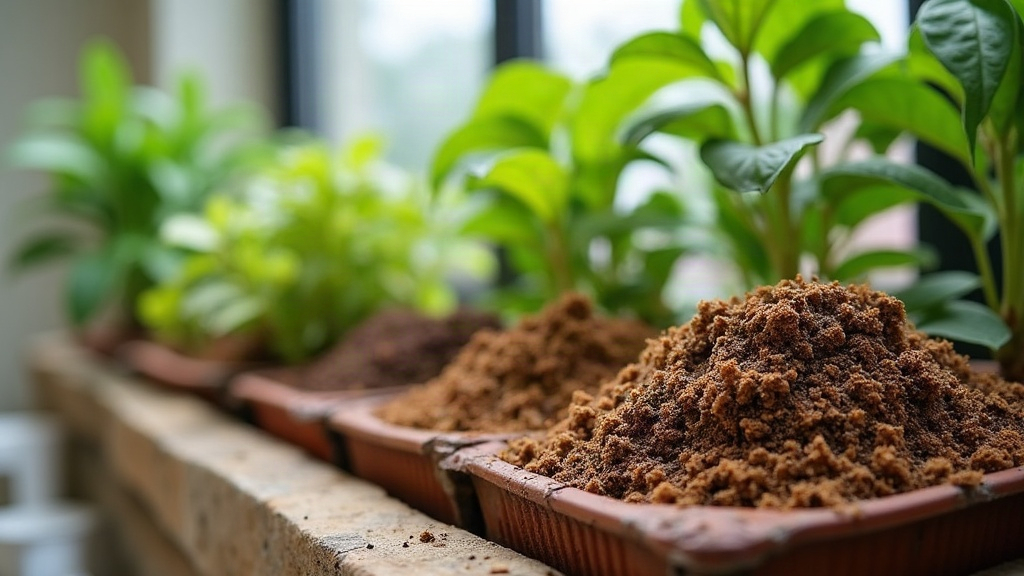
Choosing between coconut coir and peat-free compost for lightweight balcony containers really comes down to one question: do you need something light and good at holding water (coir), or something nutritionally complete and biologically alive (peat-free compost)? For most balcony growers, the honest answer is “a bit of both.” But knowing why changes how you water, how you feed, and even how you plant in the first place.
Why Weight Matters on Balconies
Balconies and rooftop terraces almost always come with weight restrictions, and this gets worse in older buildings or rented flats where nobody’s quite sure what the railing can actually take. A bag of peat-free compost, once it’s soaked through, can end up noticeably heavier than a coir-based mix of the same volume. That difference adds up fast once you’re filling several large pots, a raised trough, or a row of vertical planters.
- Dry coconut coir bricks swell to 3-9 times their compressed size once you add water, yet even fully soaked, they stay markedly lighter than compost.
- Peat-free compost (made from bark, green waste, wood fiber, or composted bracken) tends to be denser and heavier, especially wet.
- For hanging baskets, window boxes, and stacked balcony planters, every kilogram counts. Coir’s lightness takes real pressure off brackets, railings, and whatever load limit your building has.
Water Retention and Drainage
Coir holds water remarkably well while still letting the excess drain away, thanks to its fibrous structure. That makes it forgiving if you can’t water every single day, which is exactly why it works so well for herbs, salad greens, and shallow-rooted annuals sitting in hot, windy, exposed spots where pots dry out in hours rather than days.
Peat-free compost is more of a mixed bag, literally, depending on the brand. Bark-based composts drain fast but can dry unevenly, leaving dry pockets next to soggy ones. Green-waste composts hold moisture better but tend to compact over time, which chokes off airflow to the roots.
Practical tip: in pots under 30cm wide sitting in full afternoon sun, a coir-heavy mix can cut your watering frequency by roughly a third compared to plain peat-free compost.
Nutrient Content: The Real Difference
Here’s where coir falls down on its own. It has essentially no nutritional value, just a neutral, pH-balanced medium (pH 5.5-6.5) that needs feeding from the moment you plant into it. Leave it unfed and you’ll see yellowing leaves and stalled growth within 3-4 weeks, sometimes sooner if the weather’s warm.
Peat-free compost is a different story. It usually comes formulated with nutrients already in it, often a slow-release fertilizer, composted organic matter, and occasionally mycorrhizal fungi to help roots establish. Straight out of the bag, it’s basically ready to plant into.
The Best Approach: Blend Them
Most experienced container gardeners end up mixing:
- 50% coconut coir for lightness, structure, and water retention
- 50% peat-free compost for nutrients and microbial life
- Optional: a handful of perlite or grit thrown in for extra drainage in deeper pots
That combination gets you something light, well-draining, and nutritionally balanced enough for tomatoes, dwarf fruit trees, perennials, and summer bedding plants alike.
Cost and Sustainability Considerations
Coconut coir is usually sold compressed into bricks or blocks, which makes it cheap to ship and store. That’s a genuine advantage if you’re filling a dozen pots across a season and don’t want bags of compost taking over your hallway. It’s also a byproduct of coconut processing, so it counts as a renewable resource, though it typically travels from Sri Lanka or India, and that shipping distance adds a carbon cost worth weighing against buying local.
Peat-free compost, increasingly made from UK or regional green waste and composted bark, supports local supply chains and cuts down on transport emissions. Quality varies a lot between brands though, and some peat-free composts still haven’t quite matched the consistent water retention of the old peat-based mixes.
Quick Decision Guide
- Choose pure coir for seed starting, cuttings, or anywhere minimal weight is non-negotiable (balconies with strict load limits).
- Choose pure peat-free compost for larger, structurally sound containers where nutrition and simplicity matter more than shaving off kilograms.
- Blend both for general balcony container gardening: vegetables, flowering annuals, small shrubs.
Conclusion
Neither coir nor peat-free compost is a perfect fit on its own for balcony containers. Coir wins on weight and water retention but needs regular feeding to keep plants happy; peat-free compost comes with built-in nutrition but adds bulk you might not want. For most balcony gardeners, a 50/50 blend hits the sweet spot: light enough to be safe on a loaded balcony, fertile enough to carry plants through a full growing season.