Best Self-Watering Planters for Windy High-Rise Balconies Compared
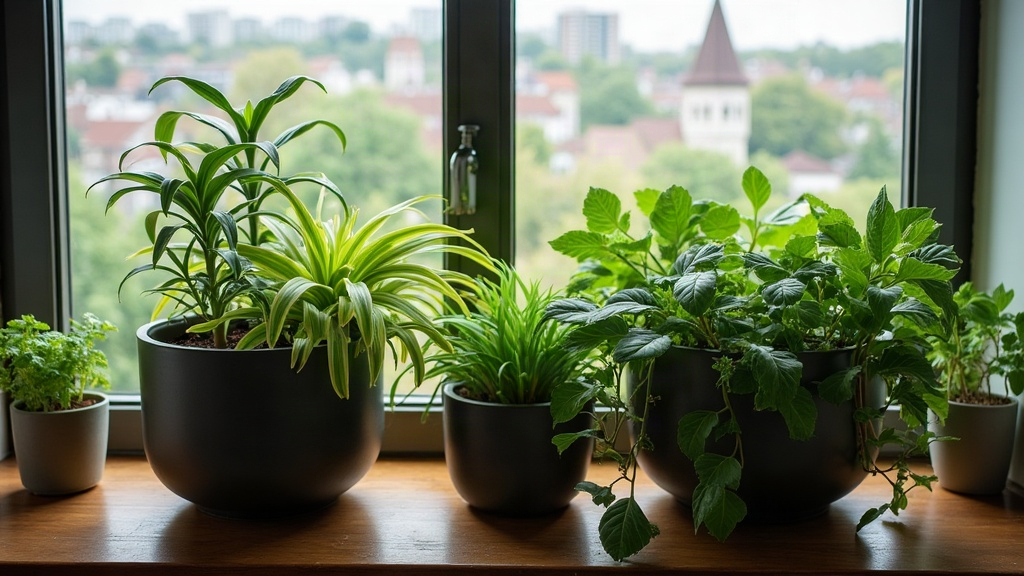
If you garden on a windy high-rise balcony, you already know the frustration: standard self-watering planters fail you twice. They tip over the first time a real gust comes through, and they dry out faster than anything at street level because wind pulls moisture out of soil far quicker than still air does. The planters that actually work up there share three things: a low center of gravity, a generous water reservoir, and materials that won’t crack or fade after a season of constant sun and airflow. Below is a comparison of the self-watering planters that genuinely hold up 15+ floors above the ground.
Why Regular Self-Watering Planters Struggle on High-Rise Balconies
Balconies above the 8th floor typically see wind speeds 20-40% higher than what you’d feel in a backyard. That difference shows up in three ways:
- Tipping risk: Tall, narrow planters act like sails. One strong gust and they’re over the rail edge or scattered across the floor.
- Faster water loss: Wind strips moisture from both soil and leaves, and it does this even when your reservoir is large enough for calmer conditions.
- Material fatigue: Cheap plastic goes brittle after months of UV exposure and temperature swings. Add wind-driven vibration on top of that, and cracks show up fast, sometimes within a single season.
A pot that’s perfectly fine on a sheltered backyard patio is not automatically safe on a 20th-floor rail or exposed corner. Treat these as two different products entirely.
Top Picks Compared
1. Best Overall Stability — Wide-Base Ceramic-Composite Self-Watering Pot
Look for a base diameter that’s at least 70% of the pot’s height, that ratio alone rules out most of the tall, elegant-looking pots you’ll see in a garden center. Ceramic-composite blends (resin mixed with stone dust) add weight down low, right where you need it, without the fragility that comes with pure ceramic. A 16-inch model with a built-in 2-gallon reservoir will typically hold steady through sustained winds up to 30 mph. That’s roughly the threshold where umbrellas start flipping inside out.
Best for: Corner placements exposed to crosswinds; tomatoes, peppers, and small shrubs.
2. Best for Railing Mounts — Locking-Bracket Self-Watering Rail Planters
If floor space is off-limits, whether for safety reasons or because your building’s rules say so, railing planters are the answer, but not just any railing planter. Skip the gravity-hook designs and go for a self-watering trough with a ratcheting, tool-tightened bracket. Check the manufacturer’s wind rating (usually given in mph) before buying, because plenty of cheap rail planters simply aren’t rated for outward-facing wind loads at all.
Best for: Herbs, trailing petunias, strawberries, basically anything light that won’t put extra leverage on the bracket.
3. Best Lightweight Option — Fiberglass Self-Watering Planter with Sand-Fill Base
Fiberglass flexes slightly instead of snapping, which makes it naturally more wind-resistant than rigid plastic. Many models also come with a hollow base you can fill with sand or gravel, so you control the weight yourself. Load it up before a winter storm season, empty it out when you want to reposition things in summer.
Best for: Renters who need to move planters around seasonally, or bring them indoors before winter hits.
4. Best Water Capacity — Deep-Reservoir Self-Watering Planter (5+ Gallons)
On a hot, windy balcony, plants can burn through a reservoir at nearly double the rate they would in a sheltered yard. A 5-gallon reservoir stretches your watering window from 3-4 days out to 7-10 days, which matters a lot if you travel frequently, or if you simply don’t want to be hauling water buckets up 20 floors every other evening.
Best for: Vegetable gardens, dwarf fruit trees, and anyone who’d rather water once a week than think about it daily.
Key Buying Criteria for Wind-Prone Balconies
- Weight when empty vs. filled: A planter needs to stay put even before the soil has settled and roots have had time to anchor it.
- Drainage overflow: Make sure the reservoir has a clear overflow port. Rainwater plus wind-driven splash can fill a reservoir surprisingly fast, and overflow with nowhere to go means root rot.
- UV-stabilized plastic or resin: Look for “UV-stabilized” or “UV-inhibited” on the label. Skip this check and you may see brittleness set in within a single season of direct sun.
- HOA/building compliance: Plenty of high-rises restrict railing-mounted planters outright. Check your building’s balcony load limits and attachment rules before you buy anything, not after.
Quick Setup Tips
- Put freestanding planters against a wall or tucked into a corner. Never center one on an open balcony, no matter how good the view is from there.
- Ring the base with gravel or landscape rocks. It adds ballast for essentially no extra cost.
- Favor compact, low-growing plants (herbs, strawberries, succulents) over top-heavy ones like large tomato vines, unless you’re working with a heavy ceramic-composite pot that can handle the extra sail area.
Conclusion
On a windy high-rise balcony, the “best” self-watering planter is rarely just the one with the biggest reservoir. What actually matters is the combination: a low center of gravity, wind-rated hardware, and materials that won’t degrade in a season of sun and vibration. A wide-base ceramic-composite pot fits open floor space well, a locking-bracket rail planter solves the problem when floor space isn’t available, and a deep-reservoir model cuts down how often you’re refilling anything. Pick based on your actual wind exposure and your building’s rules, and the garden stays on the balcony instead of scattered across the parking lot below.